30 Jun 2026
Elevation and Weather Metrics Alter Totals Markets Across Professional Sports Venues
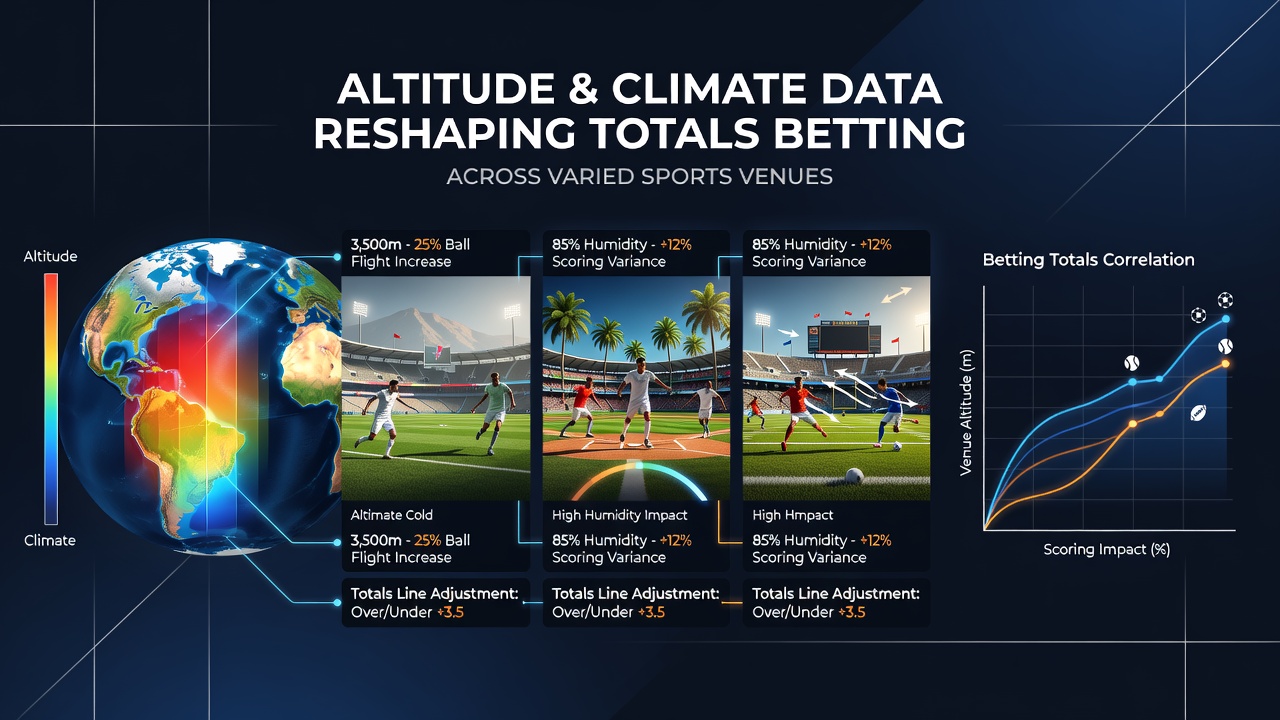
Data from multiple sports leagues shows that altitude and climate conditions directly influence scoring patterns which in turn reshape over/under betting lines at specific venues and observers note consistent adjustments by oddsmakers when teams travel to elevated or extreme-weather locations.
Baseball provides one clear example where Coors Field in Denver sits at 5,280 feet above sea level and historical records indicate home runs increase by roughly 20 to 30 percent compared with sea-level parks because thinner air reduces drag on batted balls while pitchers experience reduced movement on breaking pitches.
Altitude Effects on Ball Flight and Game Totals
Researchers at the University of Colorado have documented how reduced air density at elevations above 4,000 feet extends the distance of fly balls and line drives in baseball and similar physics apply to American football where punts and kickoffs travel farther resulting in altered field position averages that affect total points scored. Studies tracking NFL games at Empower Field at Mile High reveal an average increase of 3.2 points per contest compared with games played below 1,000 feet according to aggregated play-by-play data compiled through 2025.
Soccer matches scheduled in highland venues such as Quito Ecuador at 9,350 feet demonstrate parallel trends with match reports from CONMEBOL competitions showing elevated goal counts during acclimatization periods for visiting clubs because lower oxygen levels accelerate fatigue and defensive lapses after the sixtieth minute.
Climate Variables and Their Impact on Scoring Paces
Temperature and humidity levels further modify totals markets in basketball and tennis where extreme heat above 90 degrees Fahrenheit correlates with higher free-throw attempt rates in NBA summer league games played outdoors and data from the Australian Open indicates serve percentages drop when humidity exceeds 70 percent leading to longer rallies and elevated game counts in best-of-five sets.
Wind patterns at coastal or open-air stadiums introduce additional variance and Major League Baseball tracking systems record that sustained winds above 15 miles per hour at Wrigley Field increase the frequency of home runs to the outfield gaps while simultaneously raising the number of strikeouts due to altered pitch trajectories.

League-Specific Adjustments and Data Integration
Oddsmakers incorporate real-time meteorological forecasts and venue elevation profiles when setting opening totals and records from the 2025-2026 NBA season show that games in Salt Lake City at 4,226 feet produced over outcomes 52 percent of the time compared with a league-wide average near 48 percent prompting line movements of half a point or more on high-profile matchups.
Cricket provides another case where conditions at venues such as Johannesburg at 5,751 feet have produced higher run rates during day matches according to ICC match statistics and bowlers report reduced swing and seam movement which allows batters to score more freely in the middle overs.
June 2026 schedules include several high-profile series that will test these patterns further with baseball interleague contests at Colorado and soccer friendlies in Andean stadiums already drawing early market attention from professional syndicates that model environmental variables alongside traditional performance metrics.
Practical Applications for Totals Bettors
Those analyzing totals markets review historical splits by venue elevation and weather category and organizations such as the National Centers for Environmental Information supply archived climate datasets that enable precise backtesting of over/under results under specific temperature humidity and wind conditions. Academic papers published in the Journal of Quantitative Analysis in Sports have validated regression models that include altitude as a predictor variable and these models show improved accuracy when forecasting NBA and MLB game totals compared with baseline approaches that omit environmental factors.
Teams traveling across time zones to elevated locations often require additional recovery time which compounds the direct physical effects of thinner air and box-score archives from multiple leagues indicate reduced shooting percentages or increased turnovers in the first half of such contests before players adapt.
Conclusion
Altitude and climate data continue to provide measurable edges in totals betting because they affect ball physics player endurance and officiating tendencies in predictable ways across baseball football soccer basketball tennis and cricket and analysts who integrate elevation profiles with real-time weather feeds maintain an information advantage when lines are released. Future venue construction and scheduling decisions may incorporate these variables more explicitly yet current records already demonstrate that environmental conditions remain a core component of accurate totals forecasting.