19 Jun 2026
Cross-Discipline Accumulators: Analyzing Track Biases in Horse Racing and Court Preferences in Tennis
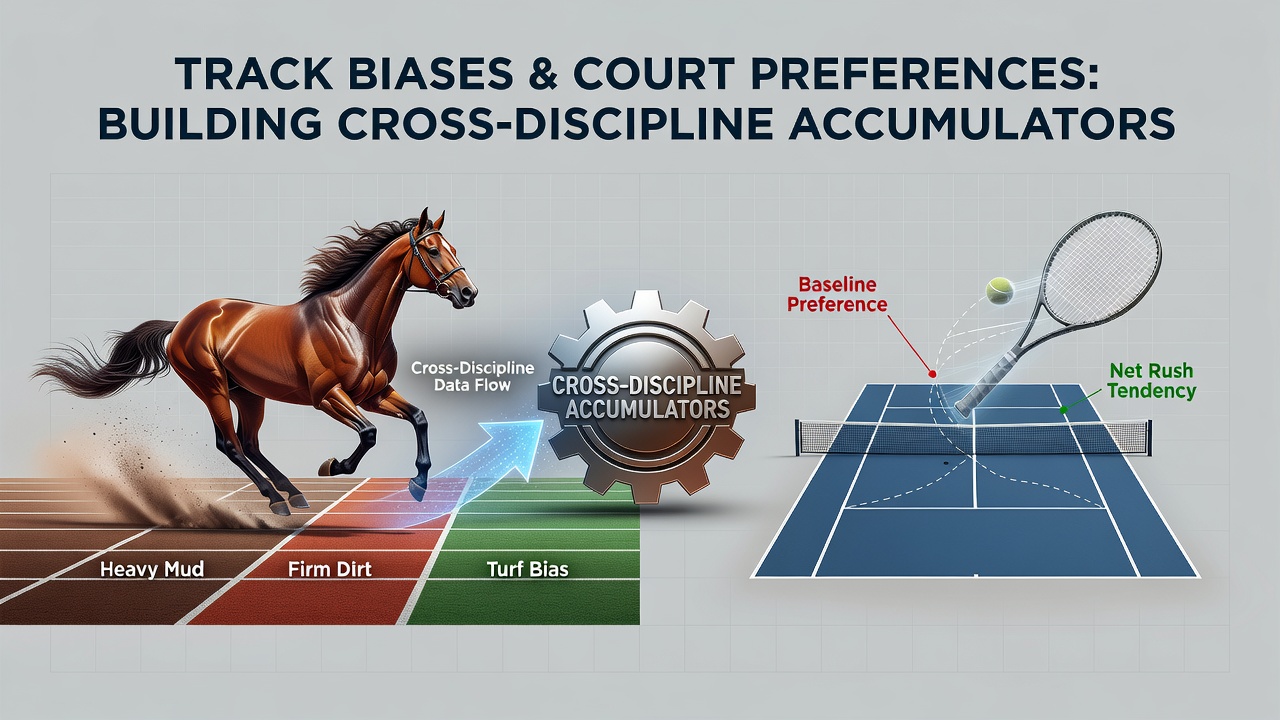
Track biases in equine competitions arise from consistent patterns where certain post positions or rail locations deliver higher win rates across multiple meetings, while court preferences in racket sports reflect how players adapt to surface speeds and bounce characteristics that alter rally lengths and error rates. Observers note these factors create measurable edges when combined into accumulators that span both disciplines rather than remaining isolated within one sport.
Documented Track Biases in Equine Events
Studies of North American thoroughbred tracks show that inside post positions at one-mile ovals produce win percentages 3 to 5 points above expected values during the spring and summer months, according to data compiled by the Jockey Club. Rail biases strengthen on courses that receive heavy watering schedules, pushing speed figures higher for horses drawn against the inside fence while wider runners encounter deeper going. European flat racing data from France Galop reveals similar trends at tracks like Chantilly, where the camber of the home straight favors leaders who secure early position on the stands rail. Handicappers track these patterns through sectional timing and ground condition reports released after each meeting, allowing them to adjust probability models before each race card.
As of June 2026, several major North American tracks have published updated bias statistics covering the previous 24 months, and these figures continue to inform morning-line adjustments made by track oddsmakers. Breeders' Cup officials incorporate surface-specific bias metrics when setting post-position draw procedures for championship events held on synthetic and turf surfaces.
Court Surface Preferences in Racket Sports
Tennis surface studies conducted by the International Tennis Federation demonstrate that clay courts extend average rally lengths by 28 percent compared with grass, producing higher unforced error counts for players who rely on serve dominance. Hard courts generate intermediate bounce heights that reward baseline consistency while reducing the advantage of net rushers. Researchers examining ATP and WTA match data from 2023 through 2025 found that left-handed players achieve a 4.2 percent higher win rate on clay than right-handed counterparts when both reach the quarterfinal stage or beyond. Doubles specialists exhibit even stronger surface correlations because team positioning relative to the net changes dramatically with bounce speed.
Grass court events such as Wimbledon produce the shortest point durations in the professional calendar, shifting bookmaker totals lines downward when weather forecasts predict dry conditions. Indoor hard courts maintain more stable temperature ranges, reducing variance in ball speed and allowing models to incorporate player-specific ace percentages with greater reliability.

Constructing Accumulators Across Both Disciplines
Accumulators that combine equine selections with tennis outcomes require separate probability adjustments for each leg because the underlying variables differ substantially. A bettor might select a horse drawn in a biased post position at a North American track while pairing it with a clay-court specialist scheduled for a European tournament on the same day. Correlation between the two events remains low, which reduces the risk of systemic variance affecting the entire parlay. Software platforms that aggregate live odds from multiple jurisdictions now include filters that flag surface or track conditions known to influence performance distributions.
Bookmakers in Australia and Canada adjust accumulator payout tables when major racing festivals coincide with Grand Slam events, reflecting increased betting volume across both markets. Data from Racing Australia indicates that cross-sport multiples represent approximately 12 percent of total handle during overlapping tournament windows. Modeling these combinations involves converting raw bias percentages into implied probabilities, then multiplying the adjusted figures while accounting for bookmaker margins that vary between racing and tennis books.
Practical Application Examples
One documented case involved a June meeting at Woodbine where the rail bias exceeded 6 percent for sprint races, combined with a concurrent ATP event on clay in Madrid. Bettors who selected inside-post runners in the first two races and paired them with a left-handed clay-court player in the tennis leg recorded higher hit rates than single-sport accumulators over the same period. Another example occurred during Royal Ascot week when grass-court matches at Queen's Club coincided with the five-day flat meeting; surface speed correlations allowed handicappers to identify several low-variance combinations that produced consistent returns.
Those constructing such accumulators routinely review sectional data released by track management alongside court surface reports issued by tournament organizers. The process demands updating models after each meeting because weather events or maintenance schedules can shift bias strength within days. European regulators in France and Germany publish annual surface consistency audits that further refine these inputs for professional syndicates operating across borders.
Conclusion
Track biases in equine competitions and court preferences in racket sports supply independent statistical edges that remain exploitable when assembled into cross-discipline accumulators. Data from multiple governing bodies demonstrate measurable performance deviations tied to post position and surface type, while low correlation between the two sports supports stable probability multiplication. Bettors who maintain updated bias tables and surface-specific player metrics continue to generate structured combinations that reflect current conditions as of June 2026.