7 Jul 2026
Altitude's Influence on Scoring Patterns in Soccer and Basketball at High-Elevation Venues
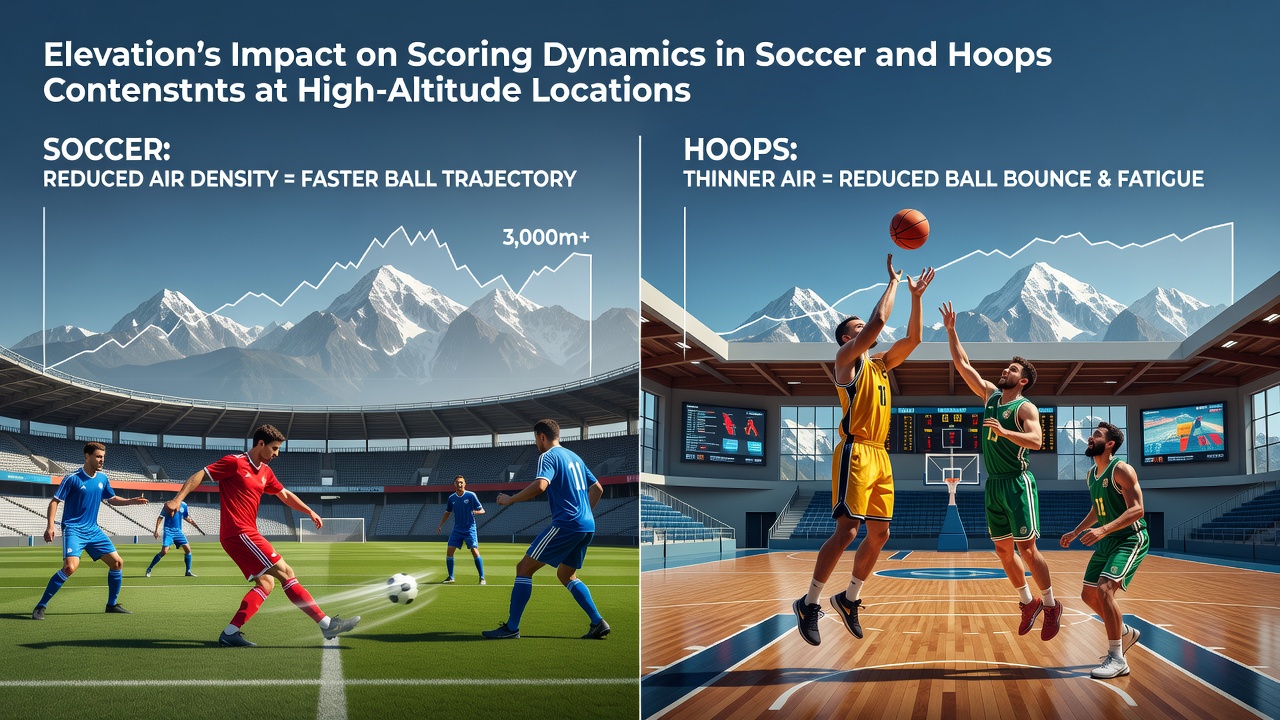
High-altitude venues create measurable shifts in scoring dynamics for both soccer and basketball contests because thinner air reduces oxygen availability while altering projectile motion for balls and players alike, and data from multiple leagues shows these effects compound over the duration of games.
Soccer Dynamics at Elevation
Researchers tracking matches in locations above 2,000 meters report that soccer balls travel farther and faster due to lower air density, which increases the frequency of long-range goals and set-piece opportunities while defenders struggle to close gaps quickly, yet visiting teams often record lower possession percentages as fatigue sets in earlier than at sea level.
Stadiums such as those in La Paz and Quito demonstrate this pattern consistently across decades of league and international play, with home sides averaging higher shot volumes in the second half because acclimatized players maintain sprint capacity longer, whereas opponents exhibit declining pass completion rates after the 60-minute mark according to performance databases maintained by confederations.
Basketball Scoring Adjustments
Basketball contests at similar elevations show parallel changes in scoring because reduced oxygen impairs repeated explosive movements, leading to fewer transition opportunities and altered shooting percentages from distance, and analysts note that teams relying on perimeter shooting adjust strategies by emphasizing half-court sets to conserve energy.
Venues like those in Denver and Mexico City produce data indicating slight increases in three-point attempts that succeed at higher rates initially, followed by drops in overall field goal efficiency as quarters progress, while rebounding totals shift because jump heights decrease measurably under lower air resistance.
Comparative Data Across Sports
Studies comparing soccer and basketball at equivalent altitudes reveal that soccer experiences more pronounced changes in ball flight paths, which directly boosts goal tallies from outside the box, whereas basketball sees subtler impacts concentrated on player stamina and foul rates, and combined datasets from high-elevation tournaments illustrate how both sports favor squads with prior exposure to thin air conditions.
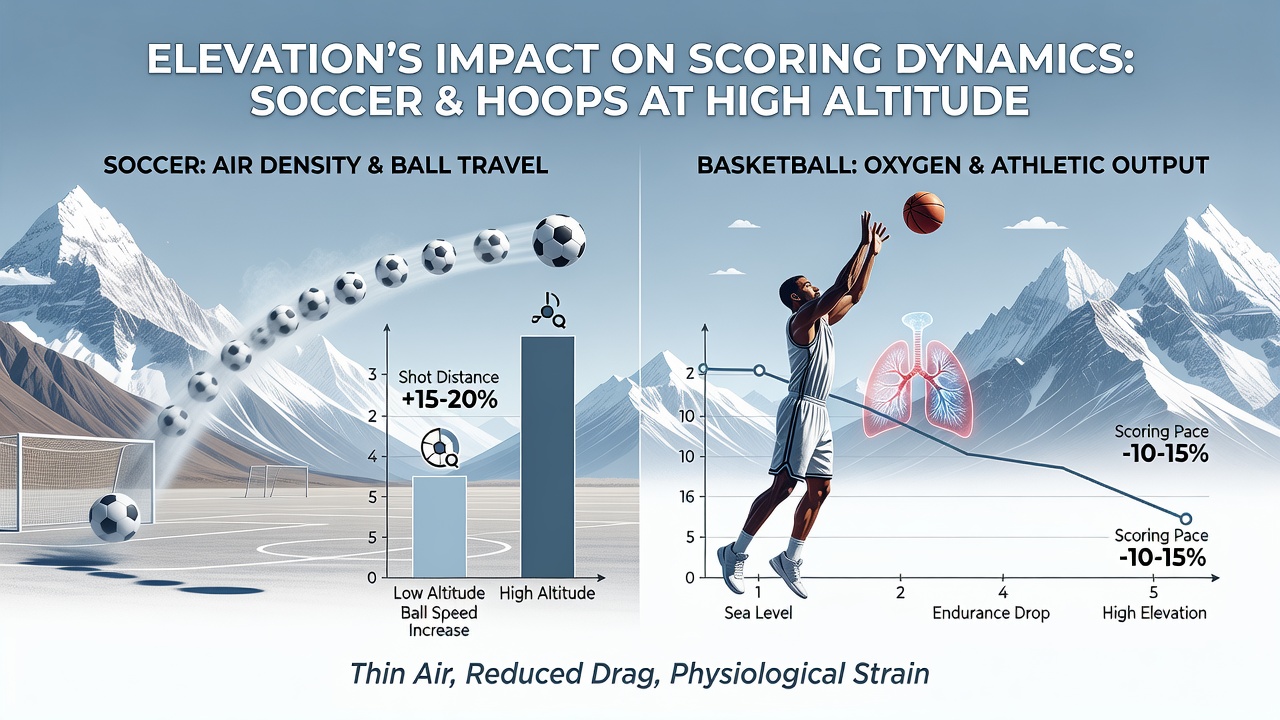
Match logs from July 2026 international windows highlight these trends in real time as several clubs traveled to Andean venues, and observers recorded elevated goal and point differentials favoring locals by margins that exceeded typical home advantages at lower elevations.
Physiological and Environmental Factors
Physiological responses documented in sports science literature indicate that hemoglobin saturation drops faster at altitude, prompting earlier onset of lactic acid buildup that limits repeated high-intensity efforts, and this mechanism applies uniformly across soccer's continuous running demands and basketball's burst-adn-recover cycles.
Environmental variables such as lower humidity and stronger solar radiation further compound recovery times between halves or quarters, which leads teams to rotate personnel more aggressively in the latter stages of contests to preserve scoring output.
Strategic Adaptations Observed
Coaching staffs prepare by incorporating altitude simulation training weeks before travel, and this approach correlates with stabilized scoring outputs in away fixtures according to longitudinal performance reviews, while unprepared squads display steeper declines in key metrics like distance covered and successful dribbles.
Ball manufacturers have adjusted inflation pressures for specific tournaments to counteract flight anomalies, yet these tweaks produce only partial mitigation as evidenced by continued disparities in scoring volume between acclimatized and non-acclimatized participants.
Conclusion
Evidence accumulated from decades of competition at high-altitude sites demonstrates clear, quantifiable impacts on scoring dynamics in both soccer and basketball, driven by the interplay of aerodynamics and human physiology, and ongoing monitoring by sports organizations continues to refine preparation protocols for future events. National Institutes of Health research on altitude physiology and reports from the International Olympic Committee medical commission provide additional context on these patterns across global competitions.